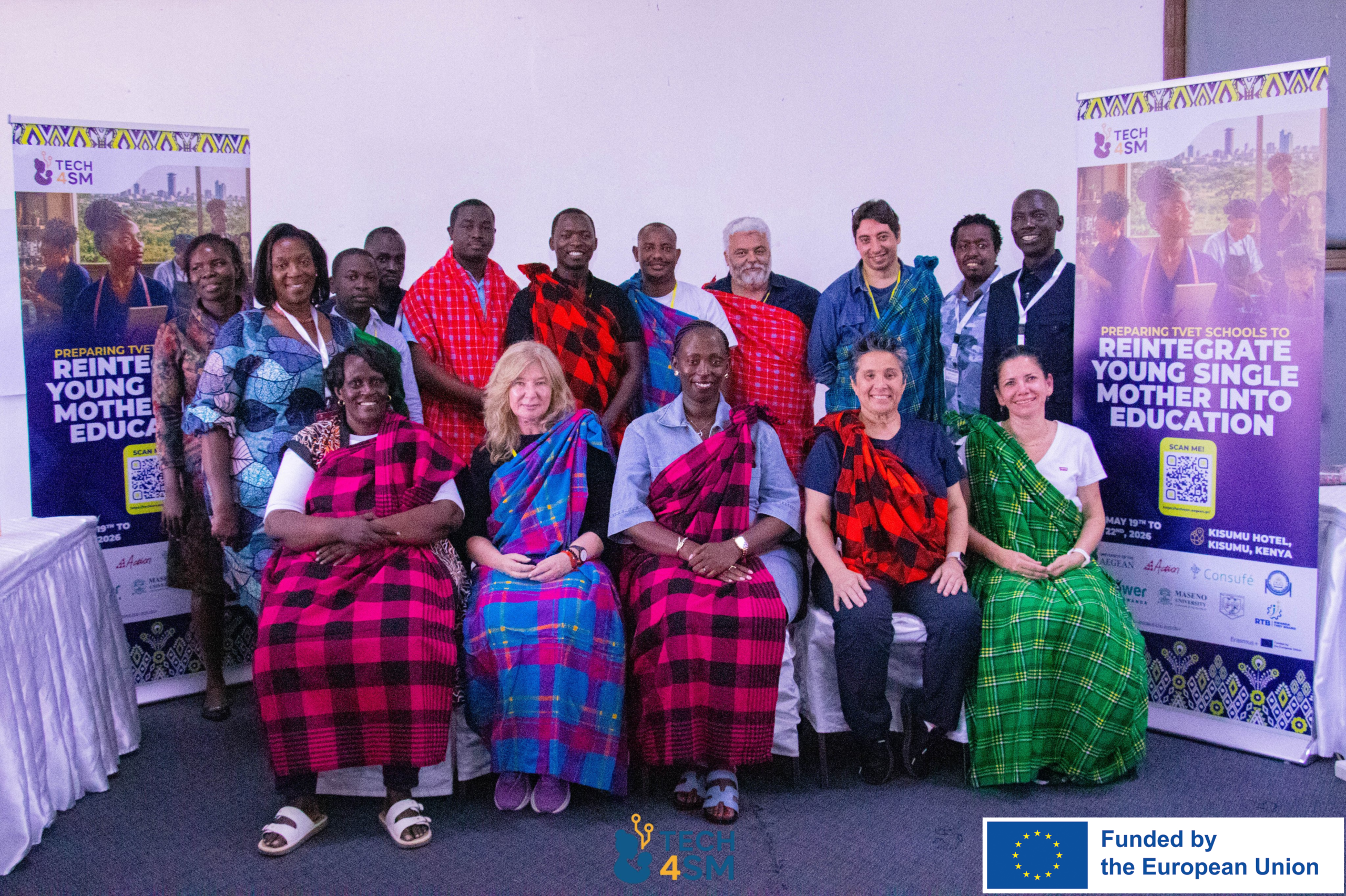
Four Days in Kisumu: Inside the Tech4SM Project’s First Steps

Day 1 — Project Kick-Off Meeting at Maseno University
19 May 2026, Vice Chancellor’s Board Room, Maseno University
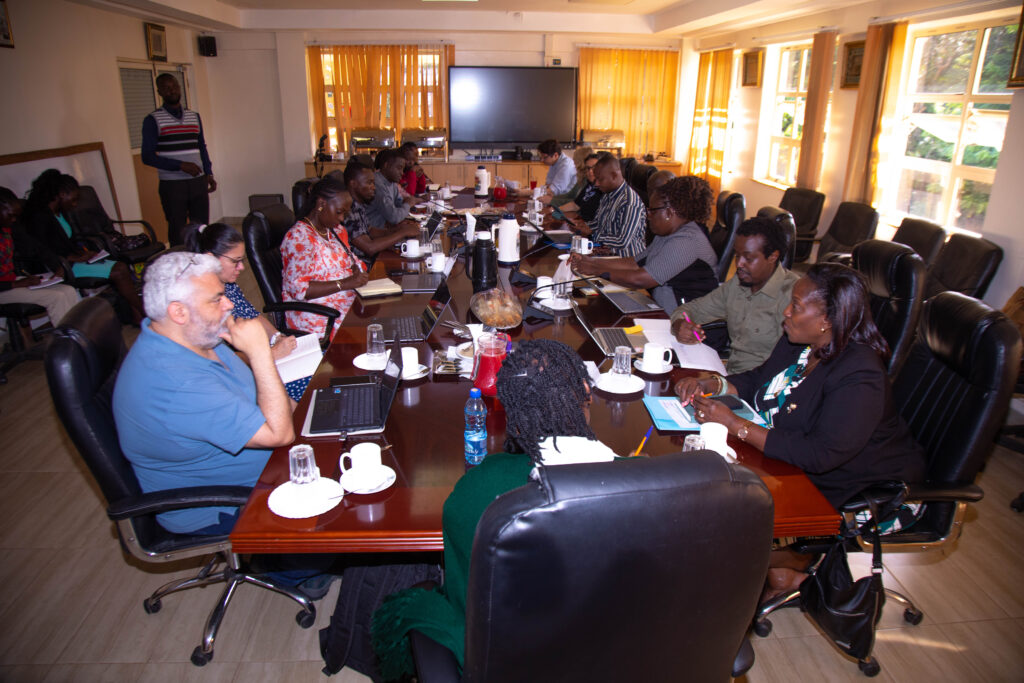
Tech4SM held its first in-person consortium meeting on 19 May 2026 at Maseno University’s Vice Chancellor’s Board Room, opening with a prayer in which partners from across countries expressed gratitude for the opportunity to begin a shared international effort. The Chairperson welcomed all participants and framed the project as a significant milestone in addressing the educational and socio-economic challenges facing young single mothers in East Africa, underlining the value of international partnership in building sustainable, impactful solutions.
Representatives from all consortium partners introduced themselves and their institutional roles. The University of the Aegean, based in Greece, holds overall project coordination. Action Synergy, also from Greece, is responsible for educational support, financial management and training. Consufé, from Denmark, leads Work Package 2. Empower Rwanda handles communication, dissemination and beneficiary tracking, while Edified Generation Rwanda is responsible for curriculum piloting and testing. The Rwanda TVET Board oversees curriculum validation and its integration into national systems, and Maseno University, together with Kenyan TVET institutions, leads local implementation and stakeholder engagement. Partners spoke to the value of knowledge exchange across institutions, recognizing the diversity of experience within the consortium as one of its core strengths.
The project coordinator presented a full overview of the initiative. Its central aim is to support the reintegration of young single mothers into education and their entry into the labour market, addressing the interrupted schooling, stigma, financial hardship and limited job opportunities they commonly face. The curriculum under development brings together three pillars: digital competencies and ICT skills, entrepreneurship and employability training, and psychosocial well-being and empowerment aimed at building confidence, resilience, self-esteem and social integration among beneficiaries. The curriculum development process itself was designed to be participatory, ensuring that beneficiaries and stakeholders would actively contribute to both the design and the implementation of the programme.
The discussion turned to the everyday barriers young single mothers face, including interrupted schooling, social stigma, financial hardship, and the ongoing challenge of balancing caregiving with learning. These realities reinforced the case for a more flexible, learner-centred TVET system, and partners agreed on a set of concrete steps: establishing childcare support within training institutions, introducing flexible class schedules, developing blended and digital learning options, building discrimination-free learning environments, and strengthening counselling and mentorship. Partners were clear that these changes could meaningfully improve access, retention and completion for young single mothers.
Partners also discussed what the curriculum itself should look like in practice. Partners agreed it needed to reflect the real economic conditions in Kenya and Rwanda, equip learners with practical, marketable skills, and stay responsive to a changing labour market, with consultations planned alongside employers, communities and beneficiaries to keep it grounded and relevant. The Rwanda TVET Board underlined the importance of aligning the curriculum with national qualification frameworks, so that institutions could adopt it more easily and sustain it over the long term. Alongside this, partners set out how stakeholders would stay engaged throughout the project, through community sensitization workshops, field consultations, focus groups, and ongoing engagement with parents, employers and policymakers, on the understanding that sustained participation builds ownership.
Partners were also walked through the project’s five work packages and their leads, covering coordination and overall management, needs assessment and stakeholder engagement, curriculum development, curriculum testing and validation in Kenya and Rwanda, and dissemination and sustainability. A substantial part of the discussion focused on ensuring the project’s impact would outlast its funding period, through beneficiary tracking systems, community and parental engagement, integration into national TVET systems, and the design of scalable models for replication in other regions.
The day concluded with the formal launch of the Erasmus+ Capacity Building Project at Maseno University. Partners committed to active participation throughout implementation, confirmed that stakeholder consultations would be carried out in both Kenya and Rwanda, and agreed that national TVET authorities would be actively involved to support policy integration and scalability. Concrete action items were assigned, covering needs assessments, stakeholder workshops, curriculum content development, piloting and validation of the curriculum, beneficiary tracking systems, and dissemination materials and a project handbook. The Chairperson thanked all partners for their commitment, and the session closed on a note of optimism about the project’s potential to transform opportunities for young single mothers in both countries.
Day 2 — Multi-Stakeholder Workshop I at Akado Vocational Training Centre
20 May 2026, Akado VTC, Kisumu, Kenya
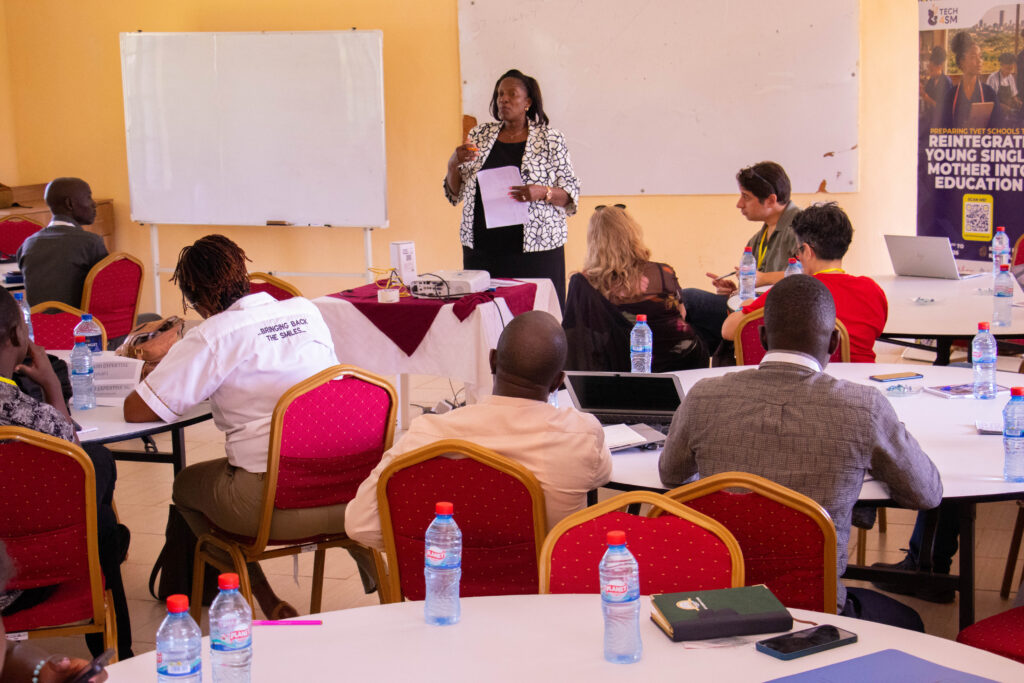
The second day of the Tech4SM kick-off shifted focus from the consortium itself to the wider ecosystem supporting young single mothers. The workshop opened at Akado Vocational Training Centre with participant introductions, as representatives from partner institutions and a broad range of local organizations described their areas of work and the services they provide to young single mothers. The session set a collaborative tone, underscoring the importance of multi-sectoral partnerships in addressing the challenges young mothers face.
A mapping exercise followed, revealing the scale of existing support: organizations present collectively serve thousands of young women, from Empower Rwanda’s 2,000 beneficiaries to smaller, targeted programmes run by local centres such as Akado and Ujima Foundation. Participants noted that this support spans education sponsorship, vocational training, childcare, psychosocial counselling, economic empowerment, health services, mentorship programmes and community development activities, much of it coordinated through sectoral working groups on youth affairs, disability inclusion, health, education and child protection.
Participants also mapped who young mothers actually turn to day to day, distinguishing formal and informal support. This included parents and guardians, teachers, school counsellors, social workers and mentors, community health promoters, peer support groups, religious institutions, local administrators and child protection officers, as well as other young mothers supporting one another directly. Even with this wide network, discussion acknowledged a persistent gap: many young mothers remain unaware of the services available to them, or struggle to access them because of social and economic barriers, pointing to a need for stronger coordination and awareness campaigns.
Working in thematic groups, participants examined the challenges young mothers face day to day. Stigma and discrimination emerged as a major issue, isolating young mothers from family, community, school and workplace alike. Poverty and financial hardship were raised as a separate and significant challenge, and several groups highlighted the prevalence of emotional, physical and sexual violence as a source of heightened vulnerability and long-term psychological trauma. Related challenges included school dropout following pregnancy, the strain of balancing childcare with education or work, mental health difficulties such as anxiety and depression, sexual and reproductive health complications, exposure to insecurity, exploitation and abuse, and restrictive cultural or religious norms that narrow opportunities further. Participants were clear that these issues are interconnected and require integrated, rather than isolated, responses.
The workshop went on to unpack specific barriers across three areas. Returning to school is blocked above all by the absence of childcare within institutions, alongside school fees, inflexible curricula, bullying and discrimination, weak enforcement of re-entry policies, competing family responsibilities, postpartum depression, and the fear and low self-esteem that follow earlier experiences of discrimination. Entering employment or starting a business is hampered by limited skills and work experience, skills that don’t match labour market demand, restricted access to startup capital, corruption in recruitment processes, unsupportive workplace cultures, limited access to information about opportunities, and employer attitudes that rarely accommodate a young mother’s caregiving responsibilities. Accessing support services in the first place is often blocked by poor awareness of what exists, discrimination from providers, corruption and nepotism, language and technological barriers, weak community support systems, and practical obstacles such as distance, alongside trauma and low self-confidence that discourage mothers from seeking help at all.
Building on this, the plenary session turned to solutions. Proposed interventions included affordable daycare centres, business incubation and entrepreneurship programmes, dedicated psychosocial support, broader economic empowerment initiatives, family life orientation, digital awareness platforms, youth-centred programming approaches, expanded youth-friendly health services, and holistic empowerment models. Participants also raised sensitive but pressing concerns, including femicide, safety, and victim-blaming, arguing that any intervention must be grounded in a rights-based approach. Reflecting on persistent obstacles, participants pointed to deep-rooted stigma, weak implementation of existing policies, lack of childcare support, fragmented information systems, restrictive socio-cultural norms, and the multiple, overlapping vulnerabilities many young mothers face at once.
The day closed with a clear set of lessons: support for young single mothers must be multi-sectoral, economic empowerment alone is not enough without psychosocial and family support, and young mothers themselves must have a say in designing the interventions meant for them. Participants also agreed that families and communities are critical to sustainable reintegration, that partnerships significantly strengthen service delivery, and that digital platforms offer real opportunities for raising awareness and improving access. These lessons translated into a set of shared commitments: validating and consolidating the day’s findings, prioritizing interventions by timeframe, drafting a responsive curriculum framework, strengthening partnerships and referral pathways, establishing data collection and monitoring mechanisms, exploring scalable models for childcare and economic and psychosocial support, and developing recommendations for policy advocacy.
Day 3 — Multi-Stakeholder Workshop II at Kisumu Hotel
21 May 2026, Kisumu Hotel, Kisumu, Kenya
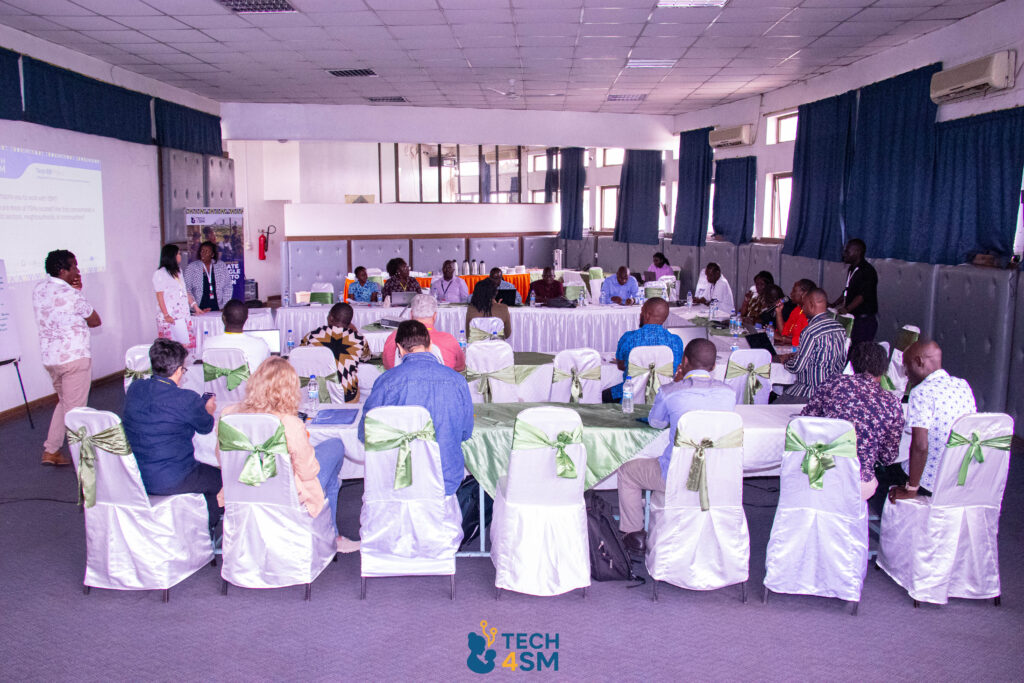
The third day built directly on the previous workshop, opening with a reflective session on the support ecosystem already available to young single mothers. Participants named the actors closest to that ecosystem: parents and extended family, religious leaders, community health promoters, chiefs, community-based and women’s rights organizations, peer groups, and schools. Even so, many noted that family relationships often become strained after a pregnancy, leaving young mothers more dependent on external support than on the family structures usually assumed to be the first line of help. Discussion also turned to geography: while most young single mothers live in rural areas, many migrate to urban informal settlements in search of work, a move that frequently exposes them to further exploitation and insecurity. Organizations present described their motivations, from closing digital divides to promoting dignity and self-reliance, and shared current interventions ranging from daycare and vocational training to mentorship and legal awareness campaigns. A participant from Rwanda added a cautionary note: even progressive gender-equality policies fail to reach young mothers when dissemination and enforcement at the grassroots remain weak.
Working groups examined the challenges young mothers face in more depth. Stigma and discrimination were again raised as a major concern, isolating young mothers from family, peers and community and damaging their confidence and mental well-being. Poverty, inadequate access to maternal healthcare, and mental health difficulties including anxiety, depression, trauma and feelings of hopelessness were identified as further core challenges, alongside family rejection, heavy childcare responsibilities, separation from children due to financial hardship, exposure to exploitation and insecurity, and diminished self-esteem.
Groups worked through barriers in three specific domains. Returning to school and vocational training was blocked by weak enforcement of re-entry policies, financial difficulty, negative societal attitudes, fear of stigma, low self-esteem, cultural pressure toward early marriage after pregnancy, resistance from some institutions, childcare responsibilities, interrupted educational pathways, and negative perceptions of vocational education itself. Entering employment or starting a business was hampered by a lack of market-relevant skills, skills mismatch, limited access to start-up capital, childcare obligations, employer discrimination, weak business management skills, high unemployment, geographical limitations, insecurity, poor working conditions, and inflexible working arrangements, pushing many young mothers toward unstable, low-paying informal work instead. Accessing existing support services was hindered less by what was available and more by whether it could be reached: limited access to information, low self-confidence, discriminatory practices by providers, poor dissemination, financial constraints, heavy childcare burdens, trauma-related difficulties, inadequate parenting support, and weak local accountability structures.
Attention turned to identifying game-changing interventions. On education and childcare, participants called for affordable daycare, reskilling and upskilling programmes, stronger learner reintegration pathways, and better policy implementation. On prevention and behaviour change, proposals centred on comprehensive sexuality education, initiatives targeting boys and men, the promotion of positive masculinity, and family orientation and sensitization programmes, framed around involving boys and men as active partners in preventing teenage pregnancy. On economic empowerment, participants recommended cooperatives and support groups, entrepreneurship and business incubation programmes, financial literacy training, and sustainable livelihood projects, paired explicitly with mentorship and psychosocial support rather than income generation alone. On governance and community engagement, participants proposed strengthening the role of chiefs, assistant chiefs and Nyumba Kumi structures, engaging respected community opinion leaders, and improving how policies and legal frameworks are communicated at community level. Finally, participants proposed centralized databases to track vulnerable learners and strengthen coordination among service providers, supporting more targeted, evidence-based decision-making.
Reflecting on the day, participants noted that stigma, weak policy enforcement, fragmented service delivery and resistant cultural norms remain persistent obstacles. They also drew a set of clear lessons. Young single mothers were described as resilient, but in need of targeted, holistic support. Existing policy was seen as generally adequate, with the main gap lying in enforcement. Childcare was identified as central to both educational and economic reintegration, and engaging men and boys was described as essential, rather than optional, to preventing teenage pregnancy.
These lessons translated into eight concrete action items. Participants agreed to consolidate the day’s findings into a draft framework, prioritize interventions across short, medium and long timeframes, and map out implementation pathways for daycare support. They also committed to strengthening mechanisms for policy enforcement, developing strategies to engage male champions, exploring a centralized beneficiary database, setting monitoring and evaluation indicators, and preparing consolidated recommendations for scale-up.
With no other business raised, the workshop closed with participants reaffirming their commitment to coordinated action across government, communities, schools, civil society and development partners. The Chairperson thanked all participants and urged them to turn the day’s proposed interventions into practical steps.
Day 4 — Partner Project Management Meeting at Kisumu Hotel
22 May 2026, Kisumu Hotel, Kisumu, Kenya
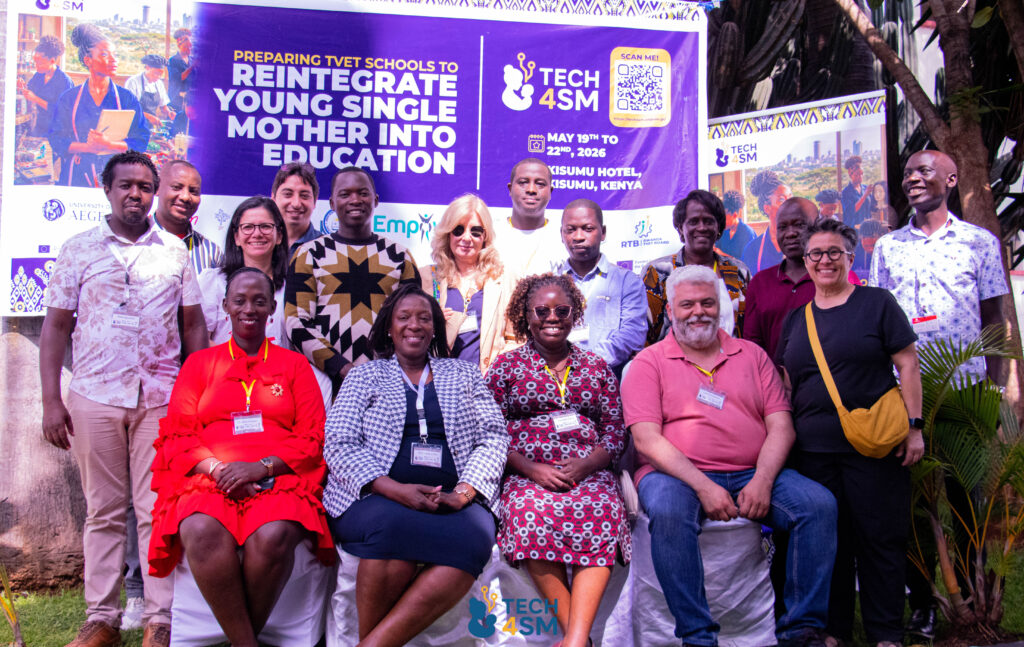
The fourth and final day of the kick-off turned to the internal running of the consortium. The project coordination team opened by thanking partners for their attendance and commitment, framing the day around strengthening collaboration, reviewing progress, clarifying administrative procedures, and planning the next phase of implementation. The importance of face-to-face interaction in strengthening coordination among partners was emphasized, and participants were encouraged to openly share experiences, challenges and suggestions to support successful implementation of the project’s objectives.
A project representative introduced the Design Thinking methodology that will guide curriculum development going forward, walking participants through its five stages: empathy, define, ideate, prototype and test. The approach was presented as user-centred and iterative, with tools such as sticky notes and physical objects used to keep the process participatory. Partners discussed how this could apply specifically to TVET and to supporting young single mothers, and raised several honest concerns: resistance from those used to more traditional methods, the difficulty of synthesizing large volumes of qualitative stakeholder input, the challenge of managing expectations when an iterative process doesn’t produce immediate results, and the need for continuous communication to explain repeated revisions. Despite these concerns, the group agreed the approach was well suited to building relevant, sustainable interventions.
The consortium confirmed an update to the Rwanda TVET Board’s role, which will continue as an associated partner supporting curriculum validation and TVET linkages in Rwanda, while Edified Generation Rwanda takes on a more active implementation role. Participants reaffirmed the importance of maintaining strong institutional relationships across the consortium and the value of flexibility in managing an international, multi-partner project. The team also reviewed internal administrative and financial procedures to support consistent reporting across partners.
Discussion moved to the project’s evaluation strategy, which will operate at three levels. An individual level will track beneficiaries’ skills, confidence, employability and well-being. An institutional level will track change within TVET institutions themselves. A system and policy level will track broader shifts in education systems and policy implementation. This impact evaluation will run alongside a process evaluation monitoring implementation itself, drawing on defined objectives, performance indicators, risk management strategies and formative questionnaires.
On curriculum content, partners noted that vocational graduates often have strong technical skills but weaker soft skills, and agreed to strengthen critical thinking, problem-solving, customer care, communication, digital literacy and adaptability, benefits expected to extend beyond young single mothers to the wider student population. This was paired with a discussion on teachers themselves. Curriculum redesign alone will not shift outcomes unless educators are gender-sensitive, girl-friendly, child-sensitive and genuinely supportive of vulnerable learners, since teacher attitudes shape learner experience as much as content does.
The Work Package team reported on the project’s first five months. The official launch had gone ahead on schedule, district-level introductions had been completed in Rwanda through the Joint Action Development Forum, and stakeholder workshops had examined the realities facing young single mothers with district leaders, church leaders, parents and community representatives. The project website and social media channels were live, and photographs from recent workshops in Huye, Rwanda were shared as evidence of strong engagement. Looking ahead, the next quarter will focus on persona development, empathy mapping, market analysis, skills gap analysis, consolidation of findings, and early curriculum prototyping under Work Package 3.
The day closed with a set of practical commitments, including finalizing partnership documentation, advancing empathy mapping and skills gap analysis, and designating communication and financial focal persons at each institution to support the project going forward.
Funded by the European Union. Views and opinions expressed are however those of the author(s) only and do not necessarily reflect those of the European Union or the European Education and Culture Executive Agency (EACEA). Neither the European Union nor the granting authority can be held responsible for them.